South Korea’s KT Femtocell Security Breach Exposes Millions to Surveillance and Fraud for Years
South Korea’s KT Femtocell Security Breach Exposes Millions to Surveillance and Fraud for Years
Look, this isn’t just another tech glitch. This is a full-on wake-up call for how fragile our digital lives really are—especially when the very tools meant to make things better are built on shaky foundations.
South Korea’s Ministry of Science and ICT has confirmed what many in the security world have been saying for years: Korea Telecom (KT) rolled out thousands of femtocells—those little, home-based mobile signal boosters—without any real security. And the consequences? Millions of South Koreans may have been quietly watched, their data harvested, and their phones used as entry points for fraud for years.
Now, law enforcement is digging in. The breach is under investigation, and the implications go far beyond a single data leak. It’s about trust. About privacy. About how much we’re willing to sacrifice when convenience takes priority over safety.
What Are Femtocells—and Why Were They So Vulnerable?
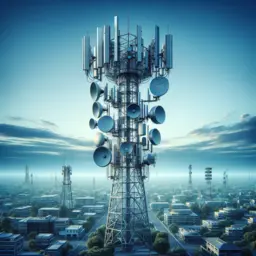
Femtocells are small devices you install at home or in a small office to fix weak cell signals. They connect to your broadband and act like mini cell towers—sending and receiving calls and data on your behalf. Pretty smart, right? But when they’re not secured properly? They become a goldmine.
In KT’s case, every femtocell used the same digital certificate to prove it was legit. Think of it like giving every house in a neighborhood the same key. If someone steals that key, they can pretend to be any of them. And they can stay in the system for a long time.
Korean security expert Yongdae Kim, an IEEE Fellow, says it’s not just a minor oversight. The devices had no root password. Encryption keys were stored in plain sight. And SSH access—used to remotely manage the device—was turned on by default. That’s not a bug. That’s a gaping hole.
Once an attacker gets the certificate—whether through brute force or a weak login—they can clone a femtocell and plug it into the network. The system doesn’t even know it’s fake. And here’s the kicker: that certificate was valid for ten years. So the window of exposure? Nearly a full decade. That’s not a few months. That’s years of silent, invisible surveillance.
A $169,000 Micropayment Scam—Or a Larger Surveillance Operation?
KT found $169,000 in suspicious micropayments in September 2024. It came from cloned femtocells. And 368 customers were affected. But Yongdae Kim says that’s not the real story.
“Rational inference: large-scale data collection was primary. Someone's greed exposed it. Without micropayment fraud, undetectable,” he says.
So what happened? The real damage wasn’t money. It was data. Text messages. Call logs. Subscriber numbers. Patterns of behavior. All of it could be used to build a detailed profile of someone’s life—what they buy, who they talk to, when they’re home, what they’re worried about.
And here’s the scary part: KT’s systems would automatically route calls to the cloned device. Users didn’t even know they were being monitored. No alerts. No warnings. Just a silent, invisible presence in their home network.
That kind of data? It’s not just for fraud. It’s for blackmail. For identity theft. For social engineering. For anything that exploits trust.
A Gang Behind the Scenes—And a Possible Link to Past Breaches
South Korean police have now confirmed a coordinated criminal group behind the cloned femtocells. They found at least 20 fake devices. One was active for ten months straight—through 2024 and into 2025.
The gang wasn’t just hacking. They were war-driving. Driving through neighborhoods to find weak spots, to spot devices that could be targeted. One suspect tried to set up a fake femtocell at Incheon Airport. Another tried to ship the hardware to China. International coordination? Check.
But here’s where it gets messy: this operation may have been possible because of a prior breach. The BPFDoor malware attack in 2022. It infiltrated KT’s systems and stayed hidden for three years. It leaked internal data—network configs, device credentials. KT hasn’t publicly admitted to that breach.
And that’s a problem. If the femtocell flaw was already exposed in 2022, and the attackers used that access to build their operation, then the damage wasn’t just a one-time incident. It was a slow, stealthy build-up.
Police have arrested 13 people—including two Chinese nationals. The mastermind? Still at large. Now on an Interpol Red Notice. This isn’t just a local crime. It’s a global cyber operation with cross-border reach.
Systemic Failures and Government Response
This isn’t just KT’s failure. It’s a symptom of a bigger pattern. Coupang, SK Telecom—big names in Korean tech—have all had massive data leaks. And there’s that nationwide camera hijacking scandal that made international headlines for how invasive it was.
With North Korea still a threat, South Korea’s digital infrastructure is under constant pressure. But the KT femtocell issue shows a deeper flaw: the foundation of the system is built on weak security. Consumer-grade devices that sit in homes—places where people feel safe—become the weakest link.
The government has stepped in. They’ve demanded KT let customers cancel their contracts without penalty. KT agreed. That’s a step in the right direction. But is it enough?
No. Not really. Without regular audits. Without mandatory security standards for customer equipment. Without real oversight of how these devices are configured and managed—this kind of flaw will keep coming back.
What This Means for the Future
This isn’t just a story about one company failing. It’s a mirror held up to the entire digital ecosystem.
We’re all living in a world where our phones, our homes, our networks—everything—is connected. And when a single, simple device like a femtocell is left open, it becomes a backdoor into everything else.
The fact that a flaw in a consumer device could enable years of surveillance and fraud shows just how fragile we are. How much we depend on systems that weren’t built with real security in mind.
South Korea is already a global tech leader. But now, the question is: will it lead with responsibility—or keep pushing forward without asking whether the foundation is strong?
If it chooses the latter, the next breach might not be a surprise. It might just be the next chapter in a long, quiet story of digital neglect.
More From The Wire
VIEW_ALL
NordVPN Clarifies Breach Allegations, Citing Exposure of Non-Operational Test Data

European Space Agency Breach Exposes Ongoing Security Challenges in Collaborative Space Research

Major US Fiber Broadband Provider Brightspeed Hit By Cyberattack, Crimson Collective Claims Responsibility